
Cash donations are decreasing in the arts, so building connections is key
Steffanie Finn is the Executive Director of the Winter Film Festival, a New York City event that promotes diversity and bridges the opportunity divide for artists.
We interviewed Steffanie to learn how she’s fundraising in the arts. Here’s what she told us.
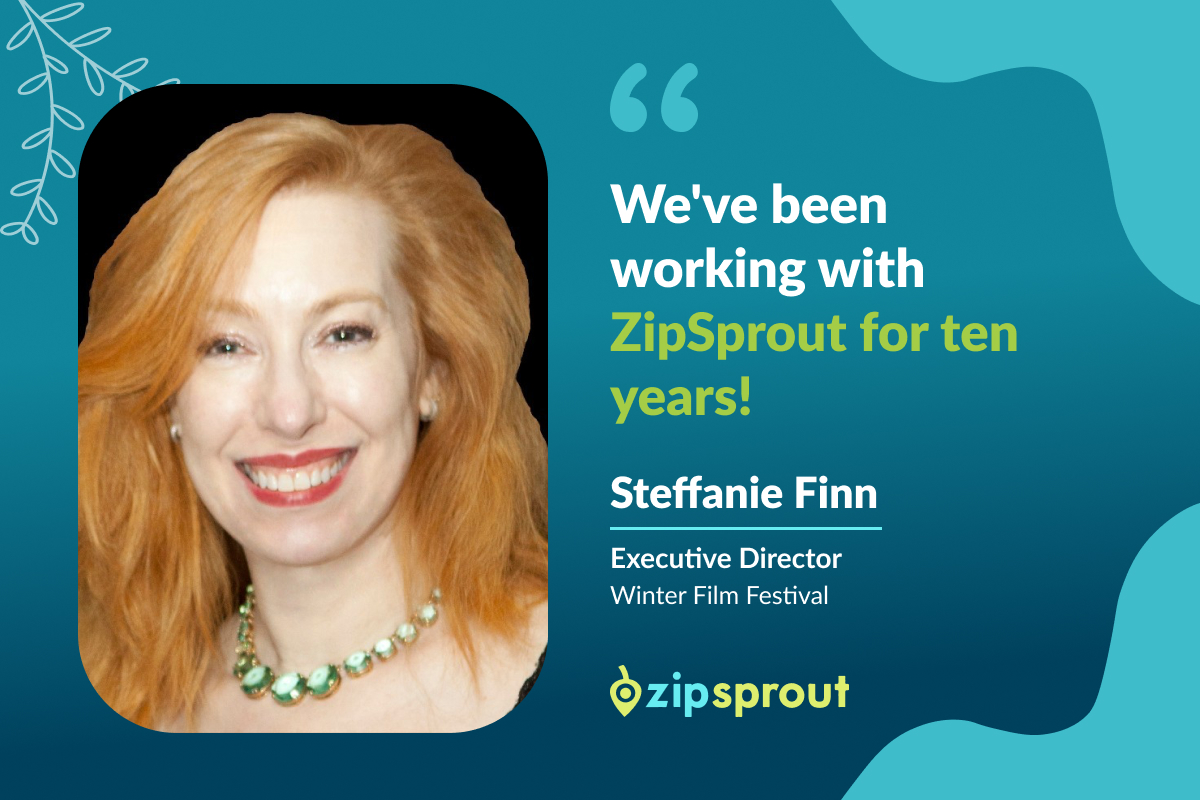
Recognizing excellence and diversity in cinema
I’m Steffanie Finn, Executive Director at the Winter Film Festival.
The Winter Film Festival is a New York City event. Like the city itself, we showcase the eclectic diversity and excitement of the independent arts world.
We are an all-volunteer, minority- and women-owned registered 501(c)(3) non-profit organization founded in 2011 in New York City by a group of filmmakers and enthusiasts. We recognize excellence and diversity in cinema, with a special emphasis on nurturing emerging filmmakers from all genres around the world.
Our mission is to promote diversity, bridge the opportunity divide, and provide a platform for underrepresented artists and a variety of genres, viewpoints, and approaches. We believe that only by seeing others’ stories can we understand each other, and only via an open door can the underrepresented artist enter the room.
Winter Film Festival is heading into its 15th edition, February 24 to 28, 2027, at Regal Union Square in Manhattan. We will be screening 75-100 indie films from around the world with Director Q&A, 6-8 Education Sessions on topics of interest to emerging filmmakers, plus networking mixers and glittering parties at venues throughout New York City.
Why cash donations are decreasing in the arts
In the last few years, it has gotten harder to find cash donations. Arts funding has been reduced across the board, and federal grants for the arts are largely unavailable. And small businesses are suffering — they often lack the resources to provide the same level of support as in the past.
Luckily for us, NY State Council and NYC Department of Cultural Affairs have increased grant support to offset this.
In-kind donations of products or software are generally easier to procure, but it varies from year to year. For example, some years we get tons of liquor donations; other years liquor is simply not available, but we get a whole lot of snacks.
A mix of grants, sponsors, and partners
Each year, we have about 60-70 sponsors and partners. The majority of our cash funding comes from NY State Council on the Arts and NYC Department of Cultural Affairs. Other sponsors include film, entertainment, and hospitality-related businesses in NYC and around the United States. We also frequently partner with local startup businesses to promote and support each other.
Additionally, we partner with several local universities, including Pratt University, Pace University, Wesleyan University, NYU/Tisch, and NY Film Academy, and with a number of film communities such as SAG, Women in Production, NY Women in Film & TV, NYU Arts Alumni, and Squalor NYC.
We customize all sponsorships to meet each sponsor’s specific needs. Options include Festival sponsorships, sponsorships for specific parties, screenings, or networking events, filmmaker travel sponsorship, and in-kind donations like prizes for winners, swag for attendees, vehicle rentals, and software. Here’s our Partnership kit.
A discovery-to-maintenance fundraising workflow
For fundraising, we always look for local businesses and new film equipment/product businesses. We generally find these through film press, word of mouth, or Google. Sponsors also come to us frequently — generally, these are local businesses who hear about us from festival friends. We don’t do anything special to make ourselves easier to find online.
We use Apollo.io to identify contacts. Once we identify a lead, we contact them via email three times. And we manage all opportunities and contacts via Salesforce.
Once we’re in contact, the process of securing donations differs for each sponsor since most donations are in-kind or come from grant proposals. But once secured, we work to maintain the relationship through email and networking events. Many of our sponsors have been with us for over a decade.
All sponsors also receive at least one social media thank you. And after the Festival, we send each sponsor a personal email with photos of winners. If they provided prizes or swag, we ensure we get photos of their product at the event.
Generally, our team of volunteers handles fundraising, and it incurs no cost.
What doesn’t work in fundraising
As for what doesn’t work, we have very few individual donors. Our website has a “Donate” button that receives virtually no activity. Our audience is emerging filmmakers, and they do not have the budget to donate. We would like to reach the donor class, but we lack real connections.
Social media fundraising via Facebook also generates very little. And we’ve posted on a variety of sponsorship websites with little success. Personal outreach and connections work best for us.
Why nonprofits must focus on relationships
My advice to nonprofits is to make many friends and treat them well! As an all-volunteer organization, we rely on a loyal army of people who return year after year to help us — judges, writers, event staff, performers, presenters, promoters, animators, photographers, venues.
Since many of our volunteers are students or new to the industry, we are one of the few organizations that gives anyone the opportunity to try something new.
For example, one year, a volunteer mentioned she’d always wanted to be a red-carpet interviewer and hoped we could use her the following year. Not even ten minutes later, I needed an interviewer and tossed her on the red carpet, and she was FANTASTIC. For our 2027 Festival, she will serve as our primary interviewer for the 4th year, and she has started interviewing for other companies as well!
Or, one year, we needed someone last minute to perform live switching at our Red Carpet Gala. We asked volunteers if anyone wanted to learn. Our technical lead taught two volunteers, and within three hours, they were running the show. Now, two years later, both work as live switchers!
Treat them well. Feed them. Mentor them. Help with visa letters if needed. Make introductions for them. Give them something fun to do. Thank them often. Volunteers are amazing!
Follow along
More expert interviews to come on ZipSprout!